Aimee Bock $5.2M Restitution: Complete Court Case, Legal Analysis, Timeline, and Financial Impact (2026 Guide)

Introduction
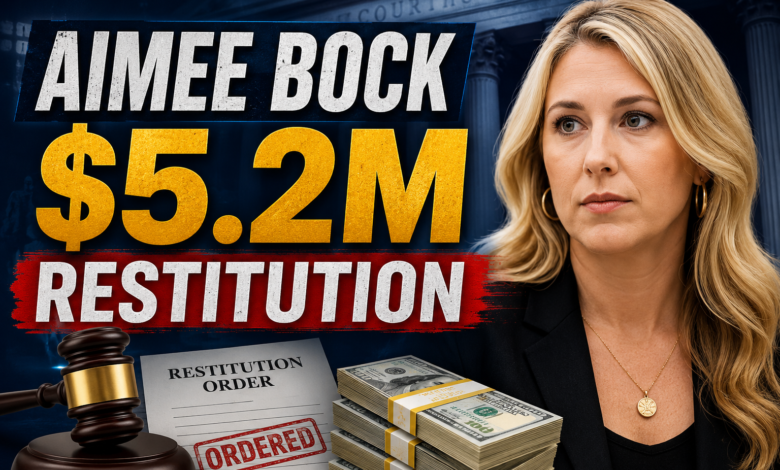
The Aimee Bock $5.2M restitution ruling became one of the most closely followed developments in the long-running Feeding Our Future fraud case. The court ordered Aimee Bock to pay $5.2 million in restitution, a financial judgment intended to compensate for losses connected to the offenses established during the federal criminal proceedings.
The case attracted nationwide attention because it involved a nonprofit organization, federally funded child nutrition programs, and allegations of large-scale fraud during the COVID-19 pandemic. It also raised important questions about nonprofit oversight, government accountability, grant management, and the protection of taxpayer-funded programs.
This guide explains everything you need to know about the Aimee Bock $5.2M restitution order, including who Aimee Bock is, how the case unfolded, why restitution was ordered, the legal process behind restitution, and what this decision means for nonprofits and public funding in the future.
Who Is Aimee Bock?
Aimee Bock is the founder and former executive director of Feeding Our Future, a Minnesota-based nonprofit organization that participated in federal child nutrition reimbursement programs.
During the COVID-19 pandemic, emergency changes expanded food assistance programs to ensure children continued receiving meals while schools were disrupted. The increased funding and relaxed administrative procedures allowed participating organizations to serve more communities, but they also created opportunities for fraud.
Federal prosecutors alleged that Feeding Our Future approved fraudulent meal sites and reimbursement claims involving millions of dollars in federal funds.
What Is the Aimee Bock $5.2M Restitution Order?
The Aimee Bock $5.2M restitution order requires repayment of $5.2 million that the court determined represented financial losses connected to the criminal conduct proven during trial.
Restitution is different from a criminal fine.
A criminal fine punishes the offender and is paid to the government.
Restitution is intended to reimburse victims for measurable financial losses caused by criminal activity.
The restitution amount becomes part of the criminal sentence and remains legally enforceable even after imprisonment.
Background of the Feeding Our Future Investigation
The Feeding Our Future investigation became one of the largest fraud investigations involving pandemic-era relief funding in U.S. history.
Federal investigators alleged that numerous meal distribution sites submitted reimbursement requests for meals that were never prepared or served.
According to prosecutors, false attendance records, fabricated invoices, fake meal counts, and misleading financial documentation were used to obtain millions of dollars from federal nutrition programs.
The investigation eventually expanded to include dozens of defendants, financial transactions across multiple businesses, and extensive evidence gathered over several years.
Timeline of the Case
Pandemic Expansion
Federal child nutrition programs expanded rapidly during the COVID-19 emergency to support families affected by school closures.
Many nonprofit organizations began operating additional meal sites to distribute federally funded meals.
Investigators Notice Irregularities
Authorities began reviewing reimbursement claims that appeared unusually large when compared with local population data and historical participation records.
These unusual reporting patterns triggered further examination by federal investigators.
Federal Investigation Begins
Investigators reviewed thousands of documents, including:
- Bank statements
- Tax filings
- Meal reimbursement claims
- Financial records
- Business registrations
- Electronic communications
- Vendor payments
- Property purchases
The investigation involved multiple federal agencies specializing in financial crimes.
Criminal Charges Filed
Federal prosecutors charged numerous individuals with offenses including conspiracy, wire fraud, money laundering, and bribery-related allegations connected to the alleged fraud scheme.
Trial Proceedings
The trial included testimony from investigators, financial experts, witnesses, and participants associated with the meal programs.
Evidence presented included electronic records, financial documentation, reimbursement data, and business transactions.
Restitution Ordered
Following the court’s findings, Aimee Bock was ordered to pay $5.2 million in restitution, reflecting losses determined by the court under applicable federal law.
Understanding Restitution
Many people mistakenly believe restitution is simply another criminal fine.
In reality, restitution serves a different legal purpose.
The court orders restitution to compensate victims for financial losses resulting from criminal conduct.
Federal judges calculate restitution using documented evidence, financial analysis, and applicable sentencing laws.
Payment obligations may continue for years depending on the individual’s financial circumstances.
How Courts Calculate Restitution
Federal courts generally evaluate several factors when determining restitution.
These include:
- Verified financial losses
- Documentary evidence
- Banking records
- Transaction history
- Witness testimony
- Accounting reports
- Federal sentencing guidelines
The court must establish that the requested restitution reflects actual losses supported by evidence.
Why This Case Matters
The Aimee Bock $5.2M restitution case has become an important example of how federal authorities investigate complex financial crimes involving public funds.
It demonstrates that emergency funding programs require strong oversight, transparent accounting, and effective compliance systems.
The investigation also highlights the importance of maintaining accurate financial records within nonprofit organizations.
Impact on Nonprofit Organizations
Many nonprofit organizations reviewed their compliance procedures after the investigation became public.
Areas receiving greater attention include:
- Internal financial controls
- Independent audits
- Documentation requirements
- Grant management
- Board oversight
- Vendor verification
- Record retention
- Employee compliance training
Organizations handling taxpayer-funded grants are expected to maintain detailed financial documentation and transparent reporting practices.
Government Oversight Lessons
The investigation encouraged government agencies to strengthen fraud prevention efforts.
Several areas have received increased focus, including:
Better Verification
Agencies now place greater emphasis on verifying reimbursement claims before payments are issued.
Improved Data Analysis
Modern fraud detection systems compare historical reporting patterns with new reimbursement requests to identify unusual activity.
Stronger Auditing
Routine financial audits help identify irregularities earlier.
Increased Accountability
Organizations receiving federal funding are expected to demonstrate compliance with grant requirements throughout the funding period.
Frequently Asked Questions
Why was Aimee Bock ordered to pay $5.2 million?
The court determined that $5.2 million represented financial losses connected to the criminal conduct established during the proceedings.
Is restitution the same as a fine?
No.
A fine punishes the offender.
Restitution compensates victims.
Can restitution continue after prison?
Yes.
Restitution obligations often continue after incarceration until payment requirements are satisfied according to federal law.
Why did the case receive national attention?
The investigation involved pandemic relief funding, nonprofit organizations, large financial losses, and one of the most significant fraud investigations connected to federal child nutrition programs.
What lessons can nonprofits learn?
The case emphasizes the importance of:
- Financial transparency
- Accurate reporting
- Independent oversight
- Internal controls
- Regulatory compliance
- Strong governance
Final Thoughts
The Aimee Bock $5.2M restitution case remains one of the most significant nonprofit fraud cases connected to federal pandemic-era funding. Beyond the restitution order itself, the investigation has influenced discussions about public accountability, grant administration, financial transparency, and fraud prevention across nonprofit organizations.
As governments continue improving oversight of publicly funded programs, this case serves as an important reminder that organizations entrusted with taxpayer resources must maintain accurate records, strong internal controls, and strict compliance with federal requirements. The legal proceedings also demonstrate how restitution functions within the criminal justice system by requiring repayment for financial losses established through the courts.