M20 Kent Vehicle Bridge Closure (2026): Latest Traffic Updates, Diversions, Travel Advice & Everything Drivers Need to Know

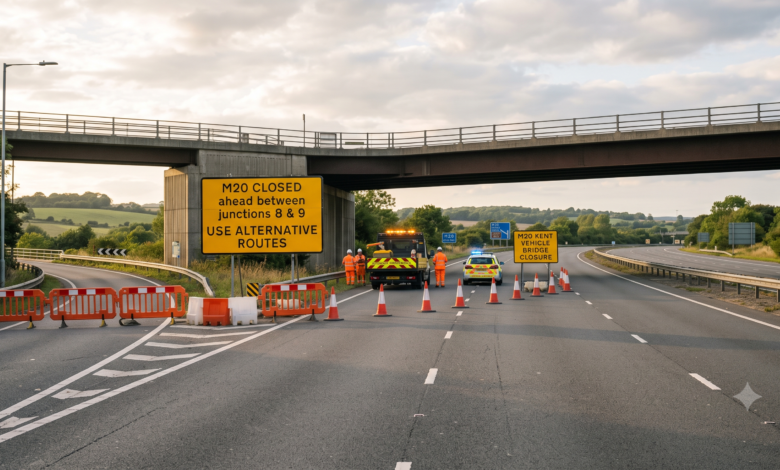
The M20 Kent Vehicle Bridge Closure is one of the most searched traffic topics for motorists travelling through Kent. As one of the busiest motorways in South East England, the M20 provides a vital connection between London, Maidstone, Ashford, Folkestone, the Channel Tunnel, and the Port of Dover. Any bridge closure, emergency repair, or planned maintenance can quickly lead to congestion, longer journey times, and changes to diversion routes.
Although there is no permanent vehicle bridge closure currently in place, temporary closures continue to occur for bridge inspections, emergency incidents, resurfacing projects, and structural maintenance. Motorists are encouraged to check traffic updates before travelling, particularly during weekends, overnight maintenance periods, and the busy summer holiday season.
What Is the M20 Kent Vehicle Bridge Closure?
The term M20 Kent Vehicle Bridge Closure refers to temporary restrictions affecting bridges that cross or connect with the M20 motorway. These closures may involve:
- Bridge maintenance
- Structural inspections
- Emergency repairs after collisions
- Bridge joint replacement
- Resurfacing works
- Barrier upgrades
- Drainage improvements
- Safety enhancement projects
Most planned closures take place overnight to minimise disruption, while emergency incidents may require immediate motorway closures.
Why Are Bridge Closures Necessary?
Motorway bridges experience continuous pressure from thousands of vehicles every day, including heavy freight traffic travelling between the UK and mainland Europe. Regular inspections help engineers identify wear before it becomes a serious safety concern.
Bridge maintenance commonly includes:
- Replacing expansion joints
- Repairing concrete surfaces
- Waterproofing bridge decks
- Upgrading crash barriers
- Installing improved drainage systems
- Inspecting bridge structures
These improvements extend the lifespan of motorway infrastructure while maintaining safe travel conditions.
Areas Most Commonly Affected
Depending on where maintenance takes place, delays may affect motorists travelling through:
- Maidstone
- Ashford
- Wrotham
- Hollingbourne
- Bearsted
- West Malling
- Aylesford
- Folkestone
- Dover
Nearby routes including the A20, M2, M25, A229, and A249 often experience heavier traffic during motorway diversions.
Recent Bridge-Related Incidents
The M20 has experienced several bridge-related disruptions in recent years, including emergency closures caused by bridge strikes, structural damage, and vehicles falling from overbridges. While these incidents are uncommon, they highlight why authorities occasionally need to close sections of the motorway immediately to carry out inspections and repairs.
Diversion Routes During M20 Closures
When bridge closures occur, National Highways usually activates clearly marked diversion routes.
Drivers may be redirected via:
- A20
- M26
- M25
- M2
- A249
- A229
Heavy Goods Vehicles (HGVs) sometimes follow different diversion routes due to weight and height restrictions.
Always follow official diversion signs rather than relying entirely on satellite navigation.
How Long Do Closures Usually Last?
Closure times depend on the type of work being carried out.
Typical durations include:
- Overnight closures
- Weekend engineering works
- Multi-day bridge repair projects
- Emergency closures after accidents
Bad weather may occasionally delay scheduled maintenance.
Impact on Daily Commuters
Commuters travelling between Kent and London may notice:
- Longer travel times
- Temporary speed restrictions
- Increased congestion
- Queueing near junctions
- Delays on surrounding local roads
Planning journeys outside peak travel periods can reduce disruption.
Freight and Commercial Transport
The M20 forms part of one of the UK’s most important freight corridors. Thousands of commercial vehicles travel this route daily towards:
- Channel Tunnel
- Port of Dover
- European freight terminals
Bridge closures can affect logistics schedules, delivery times, and transport costs, making traffic management particularly important for commercial operators.
Summer 2026 Travel Advice
Traffic across Kent increases significantly during the summer as visitors travel to coastal destinations and London attractions. Popular places include:
- Tower of London
- Buckingham Palace
- British Museum
- Hyde Park
- Westminster Abbey
- Covent Garden
- Greenwich
- Natural History Museum
Allow additional journey time if travelling during school holidays or major public events.
Driving Tips During the Closure
Before starting your journey:
- Check live traffic updates.
- Leave earlier than planned.
- Keep your fuel tank topped up.
- Carry drinking water during hot weather.
- Follow official diversion routes.
- Maintain safe distances in slow-moving traffic.
- Watch for temporary speed limits.
Frequently Asked Questions
Is the M20 currently closed because of a bridge?
There is no permanent bridge closure. Temporary restrictions may occur during maintenance, overnight engineering works, or emergency incidents.
Why do bridge closures happen?
Closures allow engineers to safely inspect, repair, and improve motorway bridges while protecting motorists and construction workers.
Which junctions are most affected?
Closures have historically affected several sections between the M25 and Folkestone, depending on maintenance schedules and incidents.
Can I still reach Dover or the Channel Tunnel?
Yes. Diversion routes are normally provided, although journey times may increase during major closures.
Should I follow my sat-nav?
Official motorway diversion signs should always take priority because temporary road management may not immediately appear on navigation systems.
Conclusion
The M20 Kent Vehicle Bridge Closure is an important part of maintaining one of England’s busiest transport corridors. While temporary disruptions can affect travel, planned maintenance helps keep bridges safe, reliable, and fit for the heavy traffic that uses the motorway every day. Checking traffic updates, allowing extra travel time, and following official diversion routes will help ensure a smoother journey whether you’re commuting, travelling for business, or heading towards the Kent coast.