The Ultimate Guide to the Mini Projector: Big Screen Entertainment in a Pocket-Sized Package

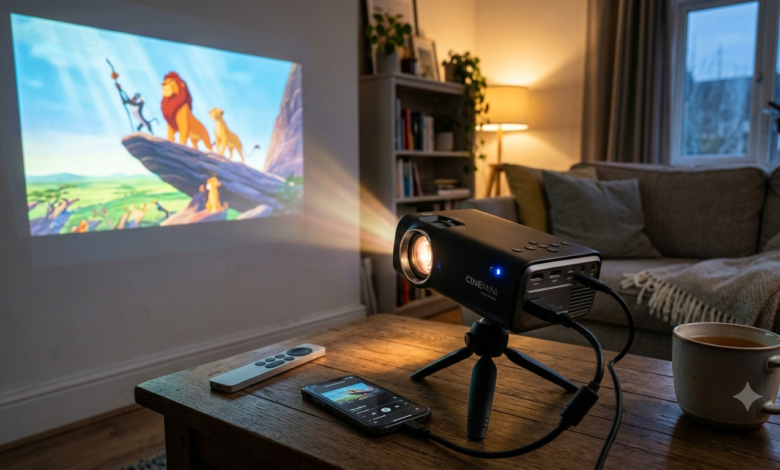
Imagine pulling an entire movie theater out of your backpack. Not too long ago, setting up a Mini Projector screen required heavy lifting, a tangled mess of VGA cables, and a machine that hummed louder than a lawnmower. Today, the modern mini projector has completely rewritten the script on how we consume visual media, transforming any blank wall into a massive display within seconds.
A premium mini projector isn’t just a gimmicky toy for tech enthusiasts; it’s a piece of highly engineered hardware that packs massive value into a tiny footprint. Whether you are aiming to binge-watch your favorite streaming series in your bedroom, host an epic backyard movie night under the stars, or deliver a flawless business presentation on the road, these ultra-portable powerhouses offer a level of flexibility that traditional television screens simply cannot match.
The sudden surge in the popularity of the mini projector boils down to massive technological leaps in efficiency and lighting. By swapping out bulky, overheating traditional lamps for ultra-dense LEDs and compact laser engines, manufacturers have achieved the impossible. We now have devices the size of a soda can that throw a crisp, colorful image up to 150 inches across, proving that true cinematic immersion no longer requires a massive living room setup.
What Exactly is a Mini Projector and How Does It Work?
At its core, a mini projector—often referred to as a pocket, pico, or portable projector—is a scaled-down projection system engineered explicitly for mobility and fast deployment. Instead of relying on the massive, power-hungry incandescent bulbs found in commercial theaters, these smaller units utilize advanced, energy-efficient light sources. The most common variation you will encounter is the LED mini projector, which runs incredibly cool, consumes minimal wattage, and boasts an impressive operational lifespan often exceeding 20,000 to 30,000 hours of playback.
The magic inside a modern mini projector typically relies on one of two foundational imaging technologies: DLP (Digital Light Processing) or LCD (Liquid Crystal Display). DLP micro-projectors utilize an array of millions of microscopic mirrors mounted on a specialized chip to reflect light with pixel-perfect precision, delivering rapid response times and excellent contrast ratios. On the flip side, compact LCD units pass light through small liquid crystal panels to create highly accurate colors, making them incredibly popular for casual home entertainment setups.
What truly differentiates a cutting-edge mini projector from the hardware of yesteryear is its self-contained, “smart” ecosystem. Most high-quality portable systems now ship with integrated operating systems like Android TV, Fire OS, or licensed Linux platforms. This means your mini projector doesn’t even need to be plugged into a computer or a media stream stick; it connects directly to your local Wi-Fi network, allowing you to stream content natively from Netflix, YouTube, and Prime Video right out of the box.
The Core Features to Look for When Choosing a Mini Projector
Navigating the specifications of a new mini projector can feel a bit overwhelming if you do not know what the numbers mean in the real world. The single most crucial metric you need to look at is brightness, which is universally measured in ANSI lumens. A common trap is falling for unverified “lux” or “marketing lumens” ratings; always look for the explicit ANSI lumen rating, where 300 to 500 ANSI lumens is the sweet spot for a dim bedroom, while premium triple-laser units pushing over 1,000 ANSI lumens can easily handle spaces with mild ambient light.
Resolution is another major factor dictating your viewing satisfaction. While ultra-budget units might list a “supported resolution” of 1080p or 4K, what you actually want to check is the native resolution—the true physical pixel count of the internal chip. For a genuinely sharp and modern viewing experience, look for a native 1080p Full HD mini projector, which ensures text is crisp and individual pixels don’t look blocky when blown up on a massive wall.
Finally, do not overlook the physical convenience features like automatic keystone correction and smart autofocus. When you move a mini projector around, the image will naturally distort into a skewed trapezoid if it isn’t perfectly centered; auto-keystone instantly detects this slant and squares the image digitally. Pair that with a robust built-in lithium-ion battery that offers at least 2 to 3 hours of untethered runtime, and you have a truly free-roaming entertainment system that can survive an entire feature-length film without hunting for an electrical outlet.
Why a Mini Projector is Replacing the Traditional Living Room TV
For decades, the standard television was the undisputed king of domestic entertainment, but the modern mini projector is rapidly shifting consumer habits, particularly among renters and minimalistic homeowners. Traditional flat-screen TVs are massive, fragile, and essentially look like giant, empty black monoliths on your wall when turned off. A mini projector completely eliminates this aesthetic clutter, blending seamlessly into your interior design by vanishing into a drawer or sitting inconspicuously on a bookshelf when your movie night concludes.
Furthermore, the price-per-inch ratio of a mini projector is utterly unmatched by traditional displays. Buying an 85-inch or 100-inch television requires dropping thousands of dollars and managing a complicated, high-risk wall-mounting process. A mid-range mini projector can easily cast a spectacular 100-inch to 120-inch screen for a fraction of that cost, offering an expansive, theater-style field of view that makes gaming, sports matches, and cinematic blockbusters feel substantially more epic and immersive.
There is also a hidden health benefit to making the switch: reduced eye strain. Televisions emit direct, short-wave blue light aimed straight into your retinas, which can lead to fatigue and disrupted sleep cycles during late-night viewing sessions. A mini projector, conversely, relies on indirect reflected light; the light travels from the lens, bounces off your wall or screen, and then enters your eyes, mimicking the natural way we perceive the world and resulting in a significantly gentler, more comfortable long-term viewing experience.
How to Set Up Your Mini Projector for the Ultimate Movie Night
Achieving an breathtaking image out of your mini projector doesn’t require a degree in audio-visual engineering, but a few quick environmental optimizations will completely transform the final output. First and foremost, you need to control the light in your environment as much as possible. While high-end laser mini projectors can fight through moderate daytime shadows, pulling down black-out curtains or waiting until complete sunset for an outdoor setup will instantly maximize your contrast ratio, making blacks look deeper and colors look incredibly vibrant.
Next, pay close attention to the surface you are projecting onto. While a clean, matte-white or soft gray drywall works remarkably well in a pinch, investing in a dedicated portable projector screen is a massive game-changer. These specialized screens are coated with reflective materials designed to bounce light directly back toward the audience rather than scattering it into the room, instantly boosting your perceived image brightness by up to 30% or more.
Lastly, you will want to optimize your audio array to match the massive scale of your newly minted screen. While most modern mini projectors feature surprisingly decent built-in drivers engineered by premium audio brands, their tiny physical chassis limits how much low-end bass they can push. To get that true chest-thumping cinema feel, use the unit’s built-in Bluetooth 5.0 or 3.5mm audio jack to route your sound to a dedicated external soundbar or a high-powered portable speaker placed directly underneath the projection surface.
Mini Projector Quick Facts
| Feature | Low-End / Budget Models | Mid-Range / Sweet Spot | High-End / Premium Models |
| Native Resolution | 480p to 720p HD | 1080p Full HD | True 4K UHD |
| Light Source | Basic LED | High-Efficiency LED / Single Laser | Triple-Color RGB Laser |
| Brightness (ANSI) | 50 – 200 Lumens | 300 – 600 Lumens | 1,000 – 3,500+ Lumens |
| Smart OS | None (Basic Media Player) | Integrated Android TV / Fire OS | Advanced OS w/ Dolby Vision |
| Battery Life | Plug-in Only / 1.5 Hours | 2 to 3.5 Hours | 3.5 to 5+ Hours (or external bank) |
| Ideal Environment | Pitch Black Rooms Only | Dark Bedrooms & Dusk Outdoors | Dim Rooms & Open Outdoor Spaces |
Frequently Asked Questions (FAQ)
Can I connect my smartphone directly to a mini projector?
Yes, absolutely. Most modern mini projectors feature built-in Wi-Fi and support casting protocols like Apple AirPlay, Google Chromecast, and Miracast. This allows you to mirror your iOS or Android smartphone screen wirelessly with a single tap. Additionally, you can use a physical USB-C to HDMI adapter cable for a zero-latency, rock-solid wired connection.
Do mini projectors work well in bright daylight?
Generally speaking, mini projectors are designed to perform best in low-light or completely dark environments due to their compact light engines. While high-end portable models pushing over 1,000 ANSI lumens can display a legible image in a shaded room during the day, direct sunlight will wash out the projection completely. For the best performance, aim for ambient dimness or nighttime viewing.
How long do the bulbs last in an LED mini projector?
Unlike the old-school home theater projectors that required expensive bulb replacements every few thousand hours, modern LED and laser mini projectors are built to last. Most are rated for 20,000 to 30,000 hours of use. To put that into perspective, running your projector for 4 hours every single day will give you well over 15 to 20 years of continuous entertainment before the light source shows any signs of degrading.
Do I absolutely need a special screen to use a mini projector?
You do not need a screen, but it definitely helps. A smooth, flat white or light gray wall will yield highly watchable and satisfying results for casual movie nights. However, if your wall has heavy texturing, bumps, or glossy paint, it will distort the image and scatter the light unevenly. A dedicated projector screen ensures a perfectly flat, highly reflective surface that maximizes clarity and color accuracy.