Lake Texoma Should Be Capitalized: The Complete Grammar and Style Guide (2026)

Introduction
If you’ve searched “Lake Texoma should be capitalized,” you’re likely looking for the correct grammatical rule. The answer is straightforward: yes, Lake Texoma should always be capitalized when referring to the specific lake. Since it is the official name of a geographical location, both Lake and Texoma are proper nouns and should begin with capital letters.
Whether you’re writing a travel guide, blog post, academic paper, news article, or business content, using the correct capitalization demonstrates professionalism and ensures grammatical accuracy. This guide explains why Lake Texoma should be capitalized, how major style guides treat geographic names, common mistakes to avoid, and practical examples you can follow.
Why Lake Texoma Should Be Capitalized
English grammar distinguishes between common nouns and proper nouns.
A common noun refers to a general person, place, or thing. Examples include words like lake, river, city, and mountain. These words are not capitalized unless they begin a sentence.
A proper noun, however, identifies a unique person, place, organization, or landmark. Since Lake Texoma Should Be Capitalized refers to one specific reservoir located on the Texas–Oklahoma border, it is considered a proper noun. Therefore, both words must always be capitalized.
Correct examples include:
- Lake Texoma attracts thousands of visitors each year.
- We spent the weekend fishing at Lake Texoma.
- The sunrise over Lake Texoma was unforgettable.
Incorrect examples include:
- lake Texoma
- Lake texoma
- lake texoma
Using lowercase letters in the official name is grammatically incorrect and should be avoided in formal writing.
Understanding What Lake Texoma Is
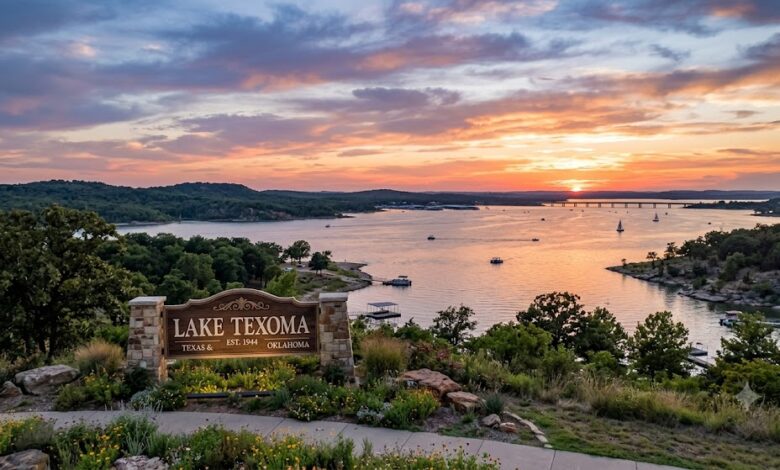
Lake Texoma Should Be Capitalized is one of the largest reservoirs in the southern United States. Created by the construction of Denison Dam on the Red River, it lies between northern Texas and southern Oklahoma. The lake covers nearly 89,000 acres and serves as an important destination for boating, fishing, camping, hiking, and family recreation.
Because Lake Texoma is an officially recognized geographical name appearing on maps, government publications, and travel resources, its capitalization follows the same grammatical rules applied to all named places.
Grammar Rule for Geographic Names
One of the most consistent rules in English grammar is that official geographic names are capitalized.
Examples include:
- Lake Texoma
- Lake Michigan
- Lake Tahoe
- Pacific Ocean
- Grand Canyon
- Mount Rainier
- Mississippi River
Each of these names refers to one specific location. The descriptive word (Lake, River, Mount, or Ocean) forms part of the official name and therefore remains capitalized.
However, when those same words are used generically, they stay lowercase.
Examples:
- We visited a beautiful lake yesterday.
- The river flooded after heavy rain.
- A mountain could be seen from our hotel.
In these sentences, the words identify a type of place rather than a specific place.
What Major Style Guides Recommend
Professional writers rely on respected editorial style guides to maintain consistency.
AP Style
The Associated Press Stylebook capitalizes official geographic names, including lakes, rivers, mountains, and regions.
Chicago Manual of Style
The Chicago Manual of Style follows the same principle by treating official place names as proper nouns requiring capitalization.
MLA and APA
Academic writing styles such as MLA and APA also require capitalization of officially named geographic locations.
As a result, every major writing standard supports writing Lake Texoma Should Be Capitalized with capital letters.
When Should “Lake” Be Capitalized?
Many writers wonder whether only “Texoma” should be capitalized.
The answer depends on how the word is being used.
When “Lake” forms part of the official place name, capitalize it.
Examples:
- Lake Texoma
- Lake Erie
- Lake Powell
- Lake Superior
When referring to a lake in general rather than naming one, leave it lowercase.
Examples:
- We relaxed beside the lake.
- The lake became crowded during summer.
Understanding this difference helps eliminate one of the most common capitalization mistakes in English writing.
Common Mistakes Writers Make
Even experienced writers occasionally make capitalization errors.
Some of the most common mistakes include:
- lake Texoma
- Lake texoma
- lake texoma
Another mistake is inconsistently capitalizing the name throughout an article. If the first mention uses Lake Texoma Should Be Capitalized every later reference should follow the same capitalization whenever the full name appears.
Consistency improves readability and demonstrates careful editing.
Examples of Correct Usage
The following examples illustrate proper capitalization in different contexts.
Travel Writing:
“Families travel to Lake Texoma Should Be Capitalized every summer to enjoy boating, fishing, and camping.”
News Writing:
“Officials announced new recreational improvements at Lake Texoma.”
Academic Writing:
“Lake Texoma plays an important role in regional water management.”
Business Content:
“Hotels near Lake Texoma Should Be Capitalized welcome visitors throughout the year.”
These examples show that the capitalization rule remains the same regardless of writing style.
Does Capitalization Matter for SEO?
While search engines are capable of understanding different letter cases, proper capitalization contributes to overall content quality.
Using Lake Texoma consistently helps:
- Improve readability.
- Demonstrate editorial accuracy.
- Strengthen topical relevance.
- Build reader trust.
- Reinforce entity recognition.
High-quality SEO content depends on accuracy, consistency, and usefulness rather than keyword stuffing. Correct grammar supports a better user experience, which is an important component of modern search optimization.
Frequently Asked Questions
Is Lake Texoma always capitalized?
Yes. Whenever you use the official geographic name, capitalize both words.
Should I write “the lake Texoma”?
No. The correct form is simply Lake Texoma.
Can I write “the lake” in lowercase?
Yes. When speaking about a lake generally instead of naming it, lowercase is correct.
Example:
“We walked around the lake before sunset.”
Is Texoma itself capitalized?
Yes. Texoma is a proper noun referring to the region associated with Texas and Oklahoma.
Do style guides agree?
Yes. AP Style, Chicago Manual of Style, MLA, and APA all capitalize official geographic names.
Writing Tips for Editors and Bloggers
If you’re editing articles or creating online content, remember these simple rules:
- Capitalize official place names.
- Use consistent capitalization throughout the article.
- Avoid switching between uppercase and lowercase versions.
- Proofread headings as carefully as body text.
- Follow recognized grammar and style guides.
These habits improve the professionalism of your writing and reduce unnecessary editing later.
Final Thoughts
The answer to the question “Lake Texoma should be capitalized” is clear. Because it is the official name of a specific geographic location, both words should always begin with capital letters whenever the full name is used.
Correct capitalization is more than a grammar rule—it reflects careful writing, improves readability, and aligns with established editorial standards. Whether you’re preparing educational material, travel content, business articles, or blog posts, consistently writing Lake Texoma Should Be Capitalized ensures your work remains accurate and professional.
Following this simple rule will help your content communicate clearly while maintaining the quality readers and editors expect.