
New England Patriots vs Tampa Bay Buccaneers Match Player Stats: Complete Breakdown and Expert Analysis


When it comes to analyzing New England Patriots vs Tampa Bay Buccaneers Match Player Stats, you are not just looking at numbers on a sheet. You are looking at a clash of football philosophies, quarterback legacies, coaching adjustments, and defensive schemes that tell a much deeper story. Every yard gained and every pass defended adds another layer to one of the most compelling matchups in modern football.
The rivalry gained even more national attention when former Patriots legend New England Patriots quarterback Tom Brady joined the Tampa Bay Buccaneers. That move alone transformed ordinary regular-season games into headline events. When evaluating New England Patriots vs Tampa Bay Buccaneers Match Player Stats, context is everything.
In this article, we will break down quarterback performance, rushing production, receiving efficiency, defensive dominance, and coaching impact. The goal is not just to present numbers, but to interpret what they actually mean on the field.
Quarterback Performance: The Heart of the New England Patriots vs Tampa Bay Buccaneers Match Player Stats
Quarterback play always defines the tone of this matchup. In games featuring Brady against his former team, the stat line alone rarely tells the full story. Completion percentage, pocket awareness, third-down efficiency, and red-zone execution are the real indicators of impact.
In several key matchups, Brady demonstrated elite decision-making under pressure. His average completion rate often hovered around the mid-to-high 60 percent range, with passing yards typically surpassing 250 yards in competitive contests. However, what stands out most in the New England Patriots vs Tampa Bay Buccaneers Match Player Stats is his ability to avoid costly turnovers. Even when pressured heavily, he consistently protected the football.
On the Patriots’ side, quarterback performances varied depending on the season and roster composition. When Mac Jones took the helm, his statistical output reflected a more conservative, timing-based offense. His yardage totals were respectable, but explosive plays were less frequent. In analyzing New England Patriots vs Tampa Bay Buccaneers Match Player Stats, the quarterback comparison often highlighted experience versus system-based execution.
Rushing Attack Comparison: Ground Game Efficiency and Impact
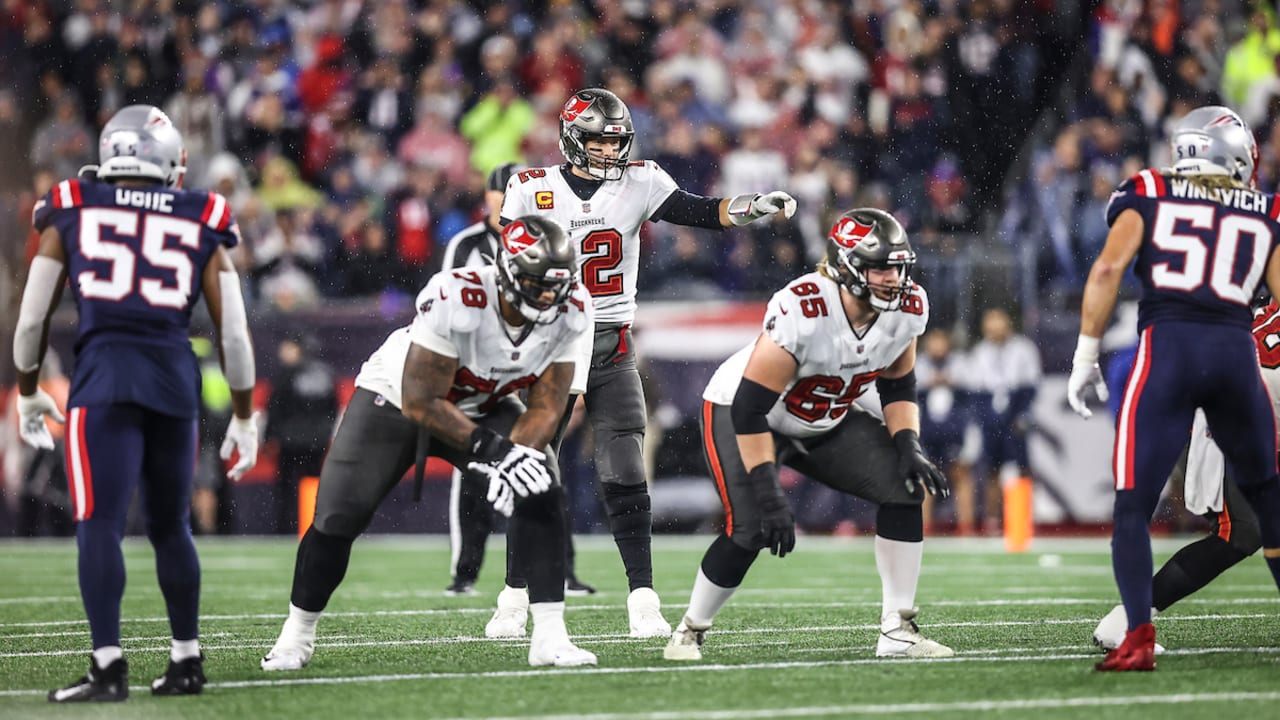
The rushing battle plays a significant role in shaping the New England Patriots vs Tampa Bay Buccaneers Match Player Stats. While both teams have leaned heavily on passing in recent years, the ground game remains essential for balance and clock control.
Tampa Bay’s rushing attack, though sometimes inconsistent, showed flashes of dominance when offensive line play clicked. When the Buccaneers established early-down efficiency, it opened up play-action opportunities that boosted overall quarterback numbers. Running backs averaging between 4.0 and 4.5 yards per carry often made the difference in tight contests.
New England traditionally emphasizes situational rushing. Their backs may not always post eye-popping totals, but their red-zone efficiency stands out. In multiple New England Patriots vs Tampa Bay Buccaneers Match Player Stats breakdowns, Patriots running backs scored crucial short-yardage touchdowns that shifted momentum. The ability to convert on third-and-short situations consistently gave New England valuable time-of-possession advantages.
Ultimately, the rushing stats in this matchup reveal strategic priorities more than raw dominance. Efficiency matters more than total yardage.
Receiving Corps Production: Explosive Plays vs Tactical Precision
Wide receivers and tight ends often determine whether the New England Patriots vs Tampa Bay Buccaneers Match Player Stats tilt toward a shootout or a defensive struggle.
For Tampa Bay, deep-threat receivers regularly stretched the field, creating chunk plays of 20+ yards. When Brady connected on vertical routes, the Buccaneers’ yards-per-attempt average spiked significantly. Red-zone targets, especially to tight ends like Rob Gronkowski during his tenure, added another layer of scoring reliability.
On the Patriots’ side, the receiving strategy leaned more toward separation and route discipline. Short-to-intermediate passes controlled tempo and reduced risk. While explosive plays were less frequent, sustained drives often resulted from precise route-running and disciplined spacing.
When evaluating New England Patriots vs Tampa Bay Buccaneers Match Player Stats, receiving efficiency metrics like yards after catch (YAC), third-down receptions, and red-zone catch percentage provide deeper insight than total receiving yards alone.
Defensive Metrics: Pressure Rates, Turnovers, and Game-Changing Plays
Defense often defines the tone of this matchup more than fans expect. Looking at New England Patriots vs Tampa Bay Buccaneers Match Player Stats without including defensive data gives an incomplete picture.
New England’s defensive identity has long been shaped by situational awareness and adaptability. Under former head coach Bill Belichick, defensive schemes frequently adjusted mid-game to neutralize star players. Blitz packages, disguised coverages, and hybrid formations forced quarterbacks into tight-window throws.
Tampa Bay’s defense, meanwhile, relied heavily on front-seven aggression. Sack totals in key matchups often influenced the outcome more than passing yards. Pressure rates exceeding 30 percent dramatically reduced quarterback efficiency. Additionally, forced fumbles and tipped interceptions played pivotal roles in several tightly contested games.
In reviewing New England Patriots vs Tampa Bay Buccaneers Match Player Stats, turnover differential consistently emerges as the most decisive metric. Teams that won the turnover battle almost always controlled the tempo and ultimately secured the victory.
Coaching Strategy and In-Game Adjustments
Coaching is the invisible column in every New England Patriots vs Tampa Bay Buccaneers Match Player Stats analysis. It does not show up as a numerical stat, but it directly influences all of them.
New England’s historical approach centered on exploiting opponent weaknesses. Defensive game plans often focused on eliminating a team’s primary weapon, forcing secondary contributors to step up. This frequently reduced star-player stat lines while increasing lesser-known players’ involvement.
Tampa Bay, especially during its championship-caliber seasons, emphasized offensive tempo and mismatch creation. Pre-snap motion, layered route combinations, and balanced formations kept defenses guessing. When executed cleanly, these tactics elevated overall offensive efficiency numbers significantly.
In multiple matchups, halftime adjustments shifted statistical trends. A slow first half could transform into a second-half scoring surge, dramatically altering the final New England Patriots vs Tampa Bay Buccaneers Match Player Stats.
Special Teams Contribution: The Hidden Factor
Special teams rarely dominate headlines, but they absolutely influence the final statistical outcome. Field position, return yardage, and kicking accuracy directly impact scoring efficiency.
Patriots special teams units historically excelled in discipline and coverage. Pinning opponents inside the 20-yard line often forced conservative play-calling. That, in turn, lowered explosive-play metrics for Tampa Bay.
Tampa Bay’s kicking game, when consistent, provided crucial three-point margins in tight contests. Field goals from 40+ yards often proved decisive in games where offensive touchdowns were limited.
If you truly want a complete understanding of New England Patriots vs Tampa Bay Buccaneers Match Player Stats, you cannot ignore field-position data and special teams execution.
Statistical Trends and Historical Significance
Zooming out, broader trends emerge when studying multiple games between these franchises. Passing attempts generally exceed rushing attempts, reflecting the modern offensive evolution of the National Football League. However, efficiency, not volume, defines winners.
Games between these teams often feature moderate scoring rather than extreme shootouts. Defensive adjustments, controlled tempo, and situational football usually keep point totals competitive but not excessive.
Another notable trend in New England Patriots vs Tampa Bay Buccaneers Match Player Stats is third-down conversion rate. The team that maintains drives typically controls time of possession by a margin of five to eight minutes. That advantage limits opposing offensive opportunities and compresses overall scoring output.
Final Thoughts on New England Patriots vs Tampa Bay Buccaneers Match Player Stats
At first glance, New England Patriots vs Tampa Bay Buccaneers Match Player Stats may appear to revolve around quarterback yardage totals. In reality, the matchup is far more complex. Efficiency metrics, turnover margins, situational conversions, and defensive pressure rates matter more than flashy box-score numbers.
Quarterback leadership, balanced offensive schemes, and disciplined defensive execution consistently shape the outcome. When analyzing these games, focusing on red-zone performance and turnover differential often provides clearer predictive value than total yards alone.
Ultimately, the New England Patriots vs Tampa Bay Buccaneers Match Player Stats tell a story of tactical football, strategic adjustments, and elite-level execution. Whether driven by legendary quarterbacks or defensive masterminds, this matchup remains a blueprint for understanding how modern professional football games are truly won.
And if you analyze the numbers carefully, you will notice something consistent: the team that controls tempo, protects the football, and capitalizes on situational opportunities almost always walks away with the victory.