Introduction
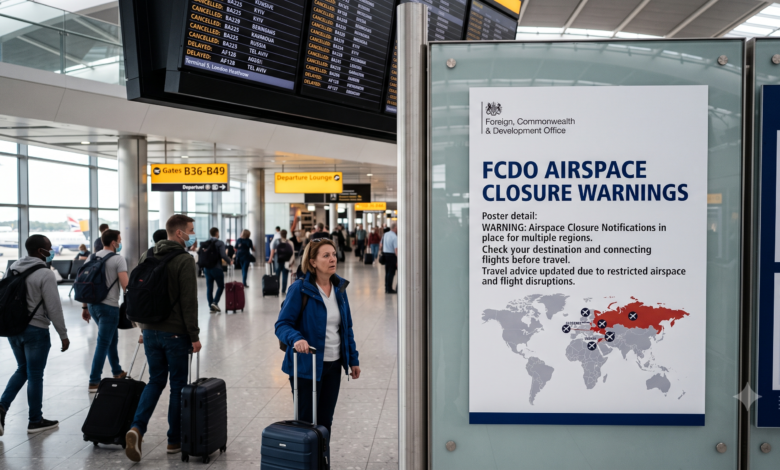
FCDO Airspace Closure Warnings have become an important part of international travel planning. Whether you are travelling for business, a family holiday, or connecting through multiple countries, understanding these warnings can help you avoid unexpected delays, cancelled flights, and safety risks.
The UK Foreign, Commonwealth & Development Office (FCDO) regularly updates its travel advice to reflect changing security situations around the world. Airspace restrictions may be introduced because of military conflict, political instability, natural disasters, or other events that could affect the safety of commercial aviation.
Checking FCDO Airspace Closure Warnings before booking a flight is now considered a practical step for every traveller.
What Are FCDO Airspace Closure Warnings?
FCDO Airspace Closure Warnings are official travel advisories issued by the UK government to inform travellers about regions where flying may present increased risks.
These warnings are based on intelligence, aviation safety assessments, and international developments. They help airlines, travel companies, and passengers understand whether certain air routes should be avoided.
Although the FCDO does not control airline operations, its guidance is widely respected and often influences travel decisions.
Why Airspace Closures Happen
Airspace may be closed or restricted for several reasons, including:
- Armed conflicts
- Missile or drone activity
- Political unrest
- Terrorism threats
- Natural disasters
- Volcanic ash clouds
- Severe weather emergencies
- Aviation safety concerns
In many cases, closures are introduced quickly when conditions change, making it important to monitor travel advice regularly.
How Airspace Warnings Affect Your Flight
When an airspace warning is issued, airlines may respond by:
- Rerouting flights
- Cancelling selected services
- Increasing journey times
- Changing departure schedules
- Adjusting connecting flights
Passengers may notice longer flight durations because aircraft are required to avoid affected regions.
Countries Frequently Affected
Although situations change throughout the year, airspace warnings often relate to areas experiencing conflict or security concerns.
Travellers should pay particular attention when flying near:
- Eastern Europe
- Parts of the Middle East
- Areas of North Africa
- Certain regions in Central Asia
The situation can change rapidly, so always check the latest travel advice before departure.
Why Checking FCDO Warnings Before Booking Matters
Many travellers compare ticket prices without reviewing official travel advice.
Reading FCDO Airspace Closure Warnings before purchasing a ticket can help you:
- Understand possible travel disruptions.
- Choose safer flight routes.
- Prepare for schedule changes.
- Review travel insurance coverage.
- Avoid unnecessary stress.
Being informed before booking often saves time and money later.
Tips for International Travellers
Before travelling internationally, consider the following checklist:
Check Travel Advice
Review the latest destination advice before booking and again a few days before departure.
Monitor Airline Notifications
Most airlines provide real-time updates through email or mobile apps.
Purchase Suitable Travel Insurance
Ensure your policy covers delays, cancellations, and unexpected itinerary changes.
Keep Flexible Travel Plans
Where possible, choose tickets that allow changes if circumstances develop.
Arrive Early at the Airport
Security procedures and flight adjustments may increase waiting times.
Understanding Flight Rerouting
When airlines avoid restricted airspace, aircraft may take alternative routes.
This can result in:
- Additional fuel stops
- Longer flight durations
- Different connecting airports
- Minor schedule adjustments
Although longer journeys may be inconvenient, rerouting is carried out to improve passenger safety.
Business Travel Considerations
Companies sending employees overseas should regularly review travel advisories.
Business travellers should:
- Confirm meeting schedules.
- Monitor destination updates.
- Keep digital copies of travel documents.
- Maintain contact with employers.
- Prepare contingency plans.
Planning ahead helps reduce disruption during international business trips.
Family Holiday Planning
Families travelling during school holidays should pay extra attention to official travel advice.
Parents should:
- Check airline updates.
- Pack essential medication in hand luggage.
- Allow extra connection time.
- Keep children’s travel documents easily accessible.
Simple preparation can make unexpected schedule changes easier to manage.
Summer Travel and Popular Destinations
During the busy summer travel season, many people travel through major international hubs before reaching destinations across Europe and beyond.
Popular attractions such as museums, theatres, parks, and historic landmarks often experience high visitor numbers. Travellers planning city breaks should combine sightseeing plans with regular checks for travel updates, especially if connecting flights pass through regions affected by aviation restrictions.
Allowing additional transfer time between flights can reduce the impact of unexpected schedule changes.
What To Do If Your Flight Is Cancelled
If your flight is affected by airspace restrictions:
- Contact your airline immediately.
- Review alternative flight options.
- Check your travel insurance policy.
- Keep receipts for additional expenses.
- Stay updated through official travel advice.
Remaining informed allows you to make better travel decisions during rapidly changing situations.
Common Questions About FCDO Airspace Closure Warnings
Are FCDO Airspace Closure Warnings legally binding?
No. They are official government travel advisories designed to help travellers make informed decisions.
Can airlines still fly through restricted areas?
Some airlines may reroute flights while others suspend services depending on their own safety assessments.
Should travellers cancel holidays?
Not necessarily. Every situation is different. Travellers should review the latest advice together with airline information before making decisions.
How often are warnings updated?
Travel advice can change at any time as new information becomes available.
Staying Safe During International Travel
Preparation remains one of the most effective ways to reduce travel disruption.
Travellers should:
- Monitor official travel advice regularly.
- Keep passports valid.
- Store digital copies of important documents.
- Register for airline notifications.
- Maintain flexible travel arrangements whenever possible.
Understanding FCDO Airspace Closure Warnings allows passengers to travel with greater confidence and prepare for changing international conditions.
Conclusion
FCDO Airspace Closure Warnings play an important role in helping travellers understand potential aviation risks before departure. Whether you are travelling for work, education, or leisure, checking official travel advice should become part of every travel plan.
Airspace restrictions may lead to rerouted flights, delays, or cancellations, but staying informed allows you to respond quickly and make better decisions. By combining official guidance with airline updates and suitable travel insurance, travellers can reduce uncertainty and enjoy a safer journey.