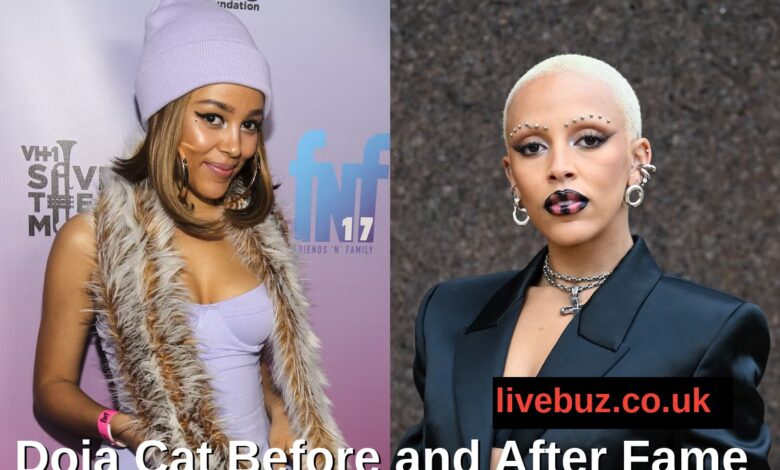
Doja Cat Before and After Fame The entertainment industry thrives on evolution, but few modern artists have undergone a metamorphosis as radical, public, and unapologetic as Amala Ratna Zandile Dlamini, known globally as Doja Cat. From her humble beginnings as a teenage SoundCloud creator to her current status as a Grammy-winning pop icon, her public persona, musical style, and physical appearance have completely transformed. For fans tracking the Doja Cat before and after fame timeline, this journey represents far more than a simple glow-up; it highlights the intentional re-invention of a visionary artist breaking free from traditional celebrity molds.
Understanding her trajectory requires examining both her early aesthetic and her current, boundary-pushing presence. In the early stages of her career, she embodied a soft, internet-centric, colorful aesthetic that perfectly matched the viral nature of her early hits. Today, she pivots toward high-fashion avant-garde looks, shaved eyebrows, and intense, dark concepts. This shift demonstrates how an artist can use physical transformation and style evolution to reclaim autonomy over their art and public image.
The Early Days: Amala Dlamini Before the Spotlight
Before she dominated the global music charts, the artist known as Doja Cat was simply Amala Dlamini, an artsy teenager navigating the creative landscape of Los Angeles. Raised by a graphic designer mother and an artistic family, her childhood was deeply unconventional, including a four-year period living in an ashram practicing Hinduism. This rich, multicultural upbringing fueled her eccentric creative instincts, leading her to experiment with breakdancing, internet chat rooms, and home music production using GarageBand. After dropping out of high school at age 16, she dedicated her time to uploading raw, psychedelic R&B tracks to SoundCloud, building an underground following that noticed her unique vocal delivery.
The early aesthetic of Doja Cat before fame was heavily influenced by mid-2010s internet subcultures, Japanese anime, and e-girl fashion. Her breakthrough viral moment arrived in 2018 with the novelty track “Mooo!”, a lo-fi song recorded in her bedroom while wearing a cow-print outfit with french fries stuffed up her nose. This iconic moment established her as an internet savant who refused to take herself too seriously. During this era, her appearance featured soft makeup, long pastel wigs, and a playful, hyper-feminine style that resonated deeply with Gen Z social media platforms.
Musically, her early work on projects like Purrr! and her debut studio album Amala leaned toward generic, radio-friendly pop-rap and smooth R&B. While her talent was undeniable, her image was heavily managed to fit standard music industry expectations. She played the part of the accessible, highly online pop princess, using Instagram Lives and Twitch streams to interact closely with her fanbase. This approachable, bubbly persona laid the foundation for her massive breakthrough, though it gave little hint of the radical artistic rebellion that lay ahead.
The Breakthrough Era: The Rise of a Pop Supernova
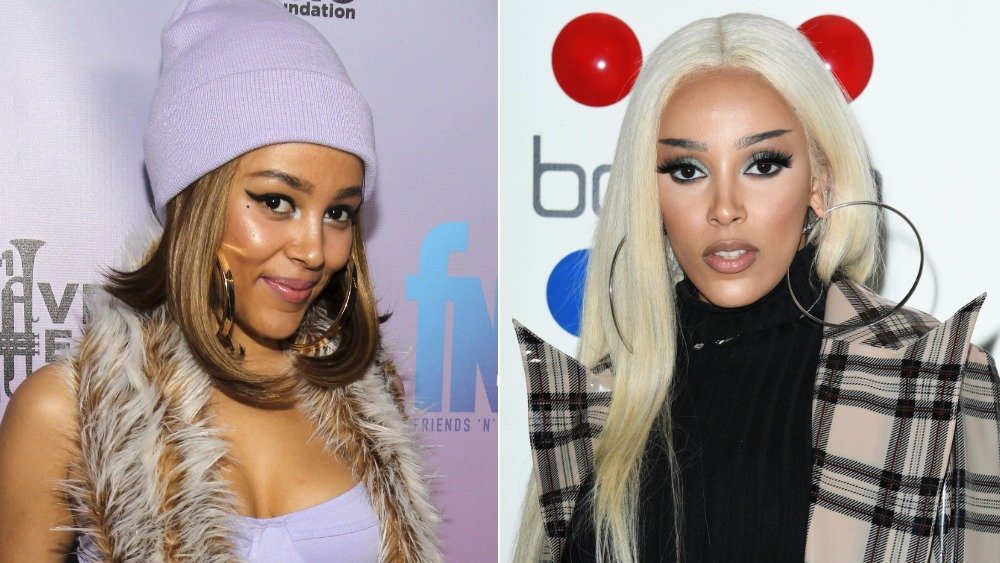
Doja Cat Before and After Fame The transition from internet meme to mainstream powerhouse crystallized with the release of her sophomore album, Hot Pink, in late 2019. Driven by the massive TikTok success of the disco-infused single “Say So,” she achieved global superstardom almost overnight. As her music climbed the Billboard charts, her visual presentation became increasingly polished, glamorous, and commercialized. This era showcased a highly stylized pop-star aesthetic, full of vibrant pinks, elaborate choreography, and flawless red-carpet appearances that cemented her status as a global trendsetter.
With the release of her 2021 magnum opus, Planet Her, her public profile reached an all-time high. Collaborating with major industry names like SZA and The Weeknd, she dominated radio airwaves while establishing a sleek, futuristic, and highly idealized image. Her look during this period featured long, flowing extensions, meticulous glamorous makeup, and high-glitz outfits that highlighted a classic Hollywood silhouette. This marked the absolute peak of her commercialized era, where her image perfectly aligned with mainstream pop expectations.
However, achieving peak celebrity status triggered an internal artistic shift. While the public embraced her glamorous, radio-friendly persona, she grew increasingly vocal about feeling restricted by the pop-star blueprint. The intense media scrutiny and standard industry expectations began to clash with her alternative, anti-conformist roots, setting the stage for a dramatic visual and musical overhaul.
Physical Transformations: Style Evolution and Cosmetic Procedures
The contrast between the Doja Cat before and after fame eras is most visibly evident in her physical transformation and evolving style choices. As she transitioned from a bedroom artist to a red-carpet regular, her style transformed from casual e-girl fashion to elite, avant-garde haute couture. Unlike many contemporary celebrities who keep their cosmetic changes secret, she has been refreshingly transparent with her fans regarding the procedures she has chosen to undergo.
In early 2023, she openly shared details on social media about undergoing a breast reduction and liposuction on her thighs, actively engaging with fans during her recovery process. She clarified to her followers that she opted for a reduction to achieve a structural shape she felt more comfortable in, and explicitly denied receiving any fat transfers or facial reconstruction surgeries. Her candidness challenged the long-standing industry taboo surrounding celebrity plastic surgery, earning praise from fans who valued her direct, unfiltered honesty.
Beyond clinical procedures, her day-to-day aesthetic underwent a massive evolution during her Scarlet album cycle. She shocked the internet by shaving her head and eyebrows on an Instagram Live session, explaining that she felt liberated dropping the heavy wigs and hair extensions that felt like a burden. She replaced her soft, pastel palette with daring, boundary-pushing choices, such as covering her entire body in 30,000 red Swarovski crystals for a Schiaparelli fashion show. This shift from safe, commercial beauty to provocative performance art signaled a complete reclamation of her physical identity.
Quick Facts: Doja Cat Career and Style Timeline
| Attribute | Before Fame (Pre-2018) | After Fame (Present) |
| Legal Name | Amala Ratna Zandile Dlamini | Amala Ratna Zandile Dlamini |
| Primary Style Aesthetic | E-girl, Pastel Wigs, Cute Anime-Inspired | Avant-Garde, Haute Couture, Alt-Punk |
| Signature Hairstyle | Long extensions, colorful synthetic wigs | Shaved head, experimental natural hair patterns |
| Musical Genre Focus | Bedroom R&B, Lo-fi Pop, SoundCloud Rap | Hardcore Hip-Hop, Experimental Pop, Dark R&B |
| Confirmed Procedures | None | Breast Reduction (to 32C), Thigh Liposuction |
| Public Persona | Accessible internet gamer, meme creator | Unapologetic artist, high-fashion icon |
Artistry Reclaimed: The “Scarlet” Era Realignment
The ultimate evolution of the Doja Cat before and after fame narrative culminated with the release of her fourth studio album, Scarlet. This era served as an explicit rejection of her past commercial pop image, as she publicly dismissed her multi-platinum pop records as engineered cash-grabs designed to please the masses. Through aggressive, rap-heavy singles like “Attention” and “Paint the Town Red,” she reclaimed her identity as a skilled lyricist and hip-hop artist, intentionally stepping away from the polished pop lane.
Visually, this era embraced dark, mythological, and confrontational imagery. Her music videos and stage performances began featuring blood, demonic motifs, and intense prosthetics, shocking casual fans who associated her with bright pop tracks. By intentionally shedding her mainstream image, she filtered out casual listeners to cultivate a dedicated fanbase that appreciated her raw, uncompromised creative expression.
This shift proved that her physical and stylistic transformations were not random choices, but a deliberate effort to regain creative control. By showing that she could dominate the charts on her own unconventional terms, she redefined what it means to be a modern superstar. She transitioned from an artist shaped by internet virality into an authoritative creative director of her own career.
Frequently Asked Questions (FAQ)
What plastic surgeries has Doja Cat publicly confirmed?
She has explicitly confirmed undergoing two cosmetic procedures in March 2023: a breast reduction surgery down to a size 32C and localized liposuction on her thighs. She has strongly denied undergoing any facial plastic surgeries, attributing changes in her facial structure to natural aging, weight fluctuations, and professional makeup techniques.
Why did Doja Cat change her look and shave her head?
She chose to shave her head and eyebrows because she felt deeply restricted and uncomfortable wearing heavy wigs and long hair extensions during grueling stage performances. She explained that she felt liberated by the change, using her shaved head as a blank canvas for high-fashion art and creative makeup designs.
What is the biggest difference between her early music and her current style?
Her early music relied heavily on soft, lo-fi R&B, electronic beats, and radio-friendly pop-rap. Her current era prioritizes aggressive, unfiltered hip-hop production and boom-bap beats, allowing her to showcase her technical rapping skills while explicitly stepping away from mainstream commercial pop.
What was Doja Cat’s first viral song before she became famous?
Her first massive viral breakthrough was the 2018 novelty song “Mooo!”, which she wrote, produced, and filmed in her bedroom over a single weekend. The video became an overnight meme due to its surreal humor and DIY aesthetic, introducing her unique personality to a global audience.